Classical Dances of India and Their States (Practice Questions)
Rahul Kumar
SSC Exam Expert & Content Editor
Table of Contents
A practice set covering all 8 officially recognised classical dances of India with their states and key features, including practice questions and FAQs for SSC GK revision.
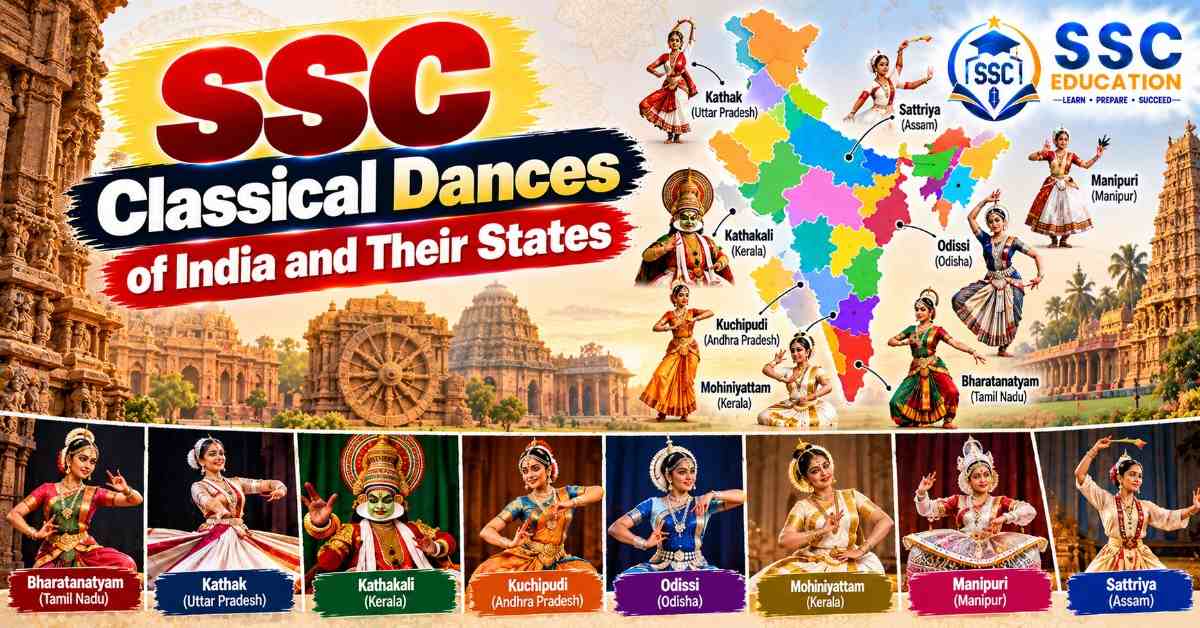
Classical dances of India are a well-defined static GK topic in SSC exams. India officially recognises 8 classical dance forms through the Sangeet Natak Akademi, each tied to a specific state. This practice set covers all 8 dances with their states and origins, followed by practice questions and FAQs.
8 Classical Dances of India: Quick Reference Table
| # | Dance Form | State of Origin | Key Feature |
|---|---|---|---|
| 1 | Bharatanatyam | Tamil Nadu | One of the oldest classical dance forms, rooted in temple traditions |
| 2 | Kathak | Uttar Pradesh | Known for intricate footwork and spins; influenced by Mughal courts |
| 3 | Kathakali | Kerala | Known for elaborate costumes, makeup and facial expressions |
| 4 | Mohiniyattam | Kerala | A graceful, lyrical dance form performed solo by women |
| 5 | Kuchipudi | Andhra Pradesh | Combines dance-drama with fast rhythmic footwork |
| 6 | Odissi | Odisha | Known for sculpturesque poses inspired by temple carvings |
| 7 | Manipuri | Manipur | Known for gentle, graceful movements, often based on Vaishnavite themes |
| 8 | Sattriya | Assam | Originated in Vaishnavite monasteries (sattras); added as a classical dance in 2000 |
Practice Questions on Classical Dances
- Q1. How many classical dance forms are officially recognised in India?
Answer: 8, as recognised by the Sangeet Natak Akademi - Q2. Which classical dance form belongs to Tamil Nadu?
Answer: Bharatanatyam - Q3. Kathakali, known for elaborate costumes and makeup, belongs to which state?
Answer: Kerala - Q4. Which classical dance form is the most recently added to the official list?
Answer: Sattriya (added in 2000), from Assam - Q5. Which dance form is associated with Uttar Pradesh and known for intricate footwork?
Answer: Kathak - Q6. Odissi, known for sculpturesque poses, originated in which state?
Answer: Odisha - Q7. Which classical dance form belongs to Manipur?
Answer: Manipuri - Q8. Kuchipudi, a dance-drama form, originated in which state?
Answer: Andhra Pradesh - Q9. Which classical dance form is performed solo and originates from Kerala, distinct from Kathakali?
Answer: Mohiniyattam - Q10. Which organisation officially recognises classical dance forms in India?
Answer: Sangeet Natak Akademi
Tips to Remember Classical Dances for SSC
- Learn all 8 dance forms together as a fixed list, since SSC frequently asks "how many" and "which state" style questions.
- Remember that Kerala has two classical dances (Kathakali and Mohiniyattam) — a common point of confusion.
- Note that Sattriya is the most recently added classical dance form (2000), making it a frequently tested exception.
- Revise alongside our festivals of India practice set to cover Indian culture topics together.
- Practice more with our previous year questions and study material.
Frequently Asked Questions (FAQs)
1. How many classical dance forms are officially recognised in India?
India officially recognises 8 classical dance forms through the Sangeet Natak Akademi.
2. Which state does Bharatanatyam belong to?
Bharatanatyam originates from Tamil Nadu and is one of the oldest classical dance forms in India.
3. Which two classical dance forms belong to Kerala?
Kathakali and Mohiniyattam are the two classical dance forms that originate from Kerala.
4. Which is the most recently added classical dance form?
Sattriya, from Assam, was added to the official list of classical dances in 2000.
5. Which state is Kathak associated with?
Kathak is associated with Uttar Pradesh and is known for its intricate footwork and spins.
6. Which classical dance form is known for sculpturesque poses?
Odissi, from Odisha, is known for poses inspired by ancient temple sculptures.
7. Which classical dance form belongs to Manipur?
Manipuri is the classical dance form that originates from Manipur.
8. What is Kuchipudi known for?
Kuchipudi, from Andhra Pradesh, is known for combining dance-drama with fast rhythmic footwork.
9. Which organisation decides which dance forms are classical in India?
The Sangeet Natak Akademi, India's national academy for performing arts, officially recognises classical dance forms.
10. Is Sattriya a classical dance?
Yes, Sattriya from Assam is one of the 8 officially recognised classical dance forms of India.
11. What is the origin of Sattriya dance?
Sattriya originated in the Vaishnavite monasteries (sattras) of Assam.
12. How should I prepare classical dance questions for SSC exams?
Memorise all 8 dance forms with their states as a fixed set, and note Kerala's two dances and Sattriya's recent addition as common exam traps.
13. Is Garba or Bhangra a classical dance form?
No, Garba and Bhangra are folk dances, not among the 8 officially recognised classical dance forms.
14. Which classical dance form is linked to temple traditions in Tamil Nadu?
Bharatanatyam is deeply rooted in temple dance traditions of Tamil Nadu.
15. Where can I find more culture-based practice sets?
Visit our Practice Papers section for more Indian culture and GK practice sets.
Rahul Kumar
SSC Exam Expert & Content Editor
Rahul is a senior SSC exam strategist with 8+ years of experience helping aspirants crack CGL, CHSL and MTS exams. He writes in-depth notification breakdowns, exam pattern guides and preparation strategies.